
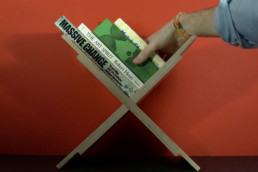
X–SPACE: A Library Designed and Built By Its Students
Recently launched on Kickstarter, X-Space is a library designed and built by 108 8th graders at the REALM Charter School in Berkeley. X-Space started out as a project by the students in the Studio H class, an in-school design and build program offered to students in the 8th to 11th grade. The students were asked what they wanted from their school and the majority just wanted a place to read, relax, and discover new things.
"For our students, this project came from their hopes and dreams and ideas for how their school could be better. They get to build the environment they want. The biggest benefit for our students is connecting an idea to a whole classroom full of tools to build something so audacious for themselves and for the hundreds of other students at REALM." - Emily Pilloton, Director of Studio H

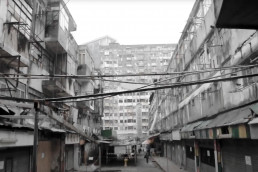
Urban Sounds
Mapping the world through sound. In a world dominated by visuals, Sonictravlog invites us to rediscover how we experience place, through sound. The mobile app transforms listening into exploration, allowing users to record, share, and experience the ambient textures of life from across the globe.
Each sound is geotagged and placed on an interactive map, creating a living archive of auditory snapshots. Street musicians in Lisbon, waves crashing in Okinawa, footsteps echoing through subway tunnels in New York, every recording becomes part of a collective symphony of place.
The app offers two ways to listen and create. Timer Mode acts as a personal sound diary, automatically capturing short clips over time to document the evolving rhythms of daily life. Navigate Mode transforms travel into collaboration, letting users record along specific routes, contribute to friends’ journeys, and compare how each ear perceives the same space.
Sonictravlog isn’t just a tool, it’s a new kind of travelogue. One where stories are told not through images or words, but through the universal, unfiltered language of sound.
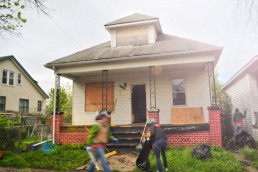
Free Homes to Writers in Detroit
In a city built on reinvention, Detroit has found a new way to write its next chapter, literally. Write A House, a nonprofit founded by a small group of writers and urbanists, is reimagining the city’s thousands of vacant homes as literary incubators. The concept is simple but radical: refurbish abandoned houses and give them, free and clear, to writers.
Poets, journalists, and novelists can apply to live rent-free in one of these restored homes. After two years of residency, during which they engage with the local creative community and contribute to the program’s blog, they receive the deed. It’s a writer-in-residence program that never has to end.
The initiative began with three homes north of Hamtramck, a diverse enclave surrounded by Detroit. It’s an area already defined by creativity and grassroots revitalization, located near the Powerhouse Project, an artist-run neighborhood featured in national publications for transforming blight into beauty. Partnering with Young Detroit Builders, a vocational nonprofit that teaches contracting skills to young residents, Write A House rebuilds properties while equipping Detroit’s youth with tangible trade experience.
The first property, known as Peach House, was funded through a $25,000 crowdfunding campaign. Its restoration marked the start of a new kind of creative infrastructure — one where housing policy, urban design, and the literary arts intersect.
Writers accepted into the program lease their homes for a minimal fee that covers taxes and insurance. After fulfilling the two-year commitment, ownership transfers to them, adding a new permanent resident to Detroit’s creative ecosystem.
Write A House is not about speculation or flipping property. It’s about building community and filling the empty spaces of Detroit with storytellers, neighbors, and cultural producers. The organization deliberately chose smaller neighborhoods where creative presence could have an immediate, visible impact, areas where the addition of a few residents could shift the balance between vacancy and vitality.
For Detroit, this program represents more than artistic opportunity; it’s an experiment in civic regeneration. Each home restored becomes a metaphor for the city’s ongoing transformation, a structure once abandoned, now alive with ideas, words, and life.
In Detroit, the blank spaces aren’t empty. They’re waiting to be written.
ACTIONABLE!NSIGHTS
- Mash-up: Write A House × Detroit
- Cultural Innovation: Property as creative capital
- Social Impact: Revitalization through art and storytelling
- Community Engagement: Writers as neighbors
- Urban Regeneration: Creativity filling the void
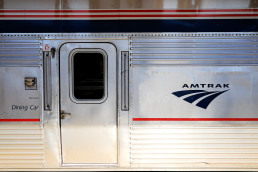
Writing in Motion: Amtrak’s Residency Turns Travel Into a Creative Medium
For decades, writers have romanticized trains, the quiet rhythm of the rails, the blur of passing landscapes, the long stretch of time to think and write. Now, Amtrak has made that daydream real.
The company launched Amtrak Residency, a program offering writers the chance to travel cross-country aboard long-distance trains, not for leisure, but for creation. Selected writers are given roundtrip tickets and private sleeper cabins, turning the train itself into a mobile studio.
The idea took off after New York-based writer Jessica Gross completed the first residency, documenting her journey from New York to Chicago and back. Her experience — equal parts motion and meditation, captured what writers have always sought: a temporary escape from routine, with enough stillness inside movement to let ideas unfold.
What’s compelling about Amtrak’s initiative isn’t just the novelty of writing on a train. It’s the recognition that environment shapes creativity. Each passing mile offers both solitude and stimulation, a sense of connection to place without the distraction of arrival. The view becomes a metronome, the journey a kind of creative tempo.
The concept of residencies rooted in experience rather than location opens an intriguing path for other institutions. Libraries, museums, and even nature preserves could serve as living laboratories for reflection and creation, spaces where time, environment, and inspiration intersect.
In a digital world obsessed with speed, Amtrak’s residency slows everything down. It reimagines travel not as transit, but as transformation, a moving window where imagination and geography share the same line.
We couldn't be more excited about #AmtrakResidency. Special thanks to @alexanderchee for bringing such a great idea to our attention.
— Amtrak (@Amtrak) February 24, 2014
ACTIONABLE!NSIGHTS
- Mash-up: Amtrak × Writing Residency
- Cultural Innovation: Travel as creative infrastructure
- Creative Environment: Motion as meditation
- Experience Design: Time and space as tools for focus
- Behavioral Shift: From destination to reflection
Radiohead Releases PolyFauna App
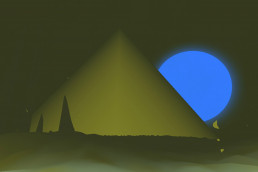
Radiohead has never been a band content to simply release music, they build worlds. With PolyFauna, the group once again blurred the line between art, technology, and consciousness.
Developed in collaboration with design studio Universal Everything, PolyFauna is a mobile app inspired by the sessions for The King of Limbs and built around the sonic landscape of the song “Bloom.” It’s less a game or a traditional interactive experience, and more an ambient ecosystem, an evolving visual and auditory field that reacts to touch, motion, and presence.
Users explore an abstract environment of swirling forms, shifting colors, and organic soundscapes. Guided only by a floating red dot, the experience is meditative and surreal, a living sketch of Radiohead’s imagination rendered in code.
At its core, PolyFauna draws from early computer life experiments and the idea of subconscious creation. It’s an experiment in digital ecology, one where users don’t consume art, they inhabit it. The screen becomes a portal into a generative dream state, where every gesture ripples through a synthetic world built on rhythm and randomness.
While PolyFauna may not reach the narrative complexity of Björk’s Biophilia or the technical innovation of Arcade Fire’s Just a Reflektor, it stands apart in its quiet ambition. It’s not about control or achievement, but surrender, a reminder that in Radiohead’s universe, interaction is another form of listening.
Thom Yorke announced the launch of the app via a blog post on February 11th:
We have made an app called PolyFauna.
PolyFauna is an experimental collaboration between us (Radiohead) & Universal Everything, born out of The King of Limbs sessions and using the imagery and the sounds from the song Bloom.
It comes from an interest in early computer life-experiments and the imagined creatures of our subconscious.
Your screen is the window into an evolving world.
Move around to look around.
You can follow the red dot.
You can wear headphones.
ACTIONABLE!NSIGHTS
- Mash-up: Radiohead × Universal Everything
- Creative Medium: Music as interactive art
- Digital Behavior: Exploration as participation
- Experience Design: Generative environments
- Cultural Intersection: The subconscious meets code
Red Bull House of Art: Detroit
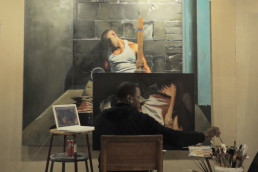
During this year’s Grammy Awards, a Red Bull commercial quietly stole the show. Amid the glamour and spectacle, it offered something more grounded, a visual meditation on creativity, collaboration, and rebirth. The ad promoted Red Bull House of Art, a program designed to give emerging artists the space, tools, and freedom to create without financial or institutional constraint.
The concept began in Brazil in 2010, but its resonance feels distinctly Detroit. The House of Art transforms industrial spaces into collaborative studios and galleries, creative incubators where painters, sculptors, photographers, and digital artists can experiment without boundaries. The program is less about sponsorship and more about stewardship, offering artists the foundation to rebuild, redefine, and reimagine their craft from the ground up.
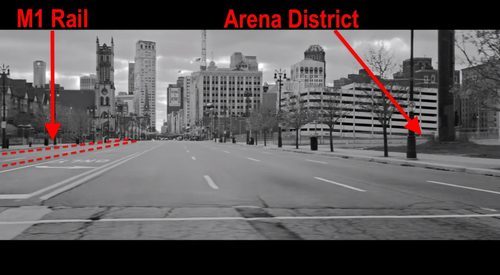
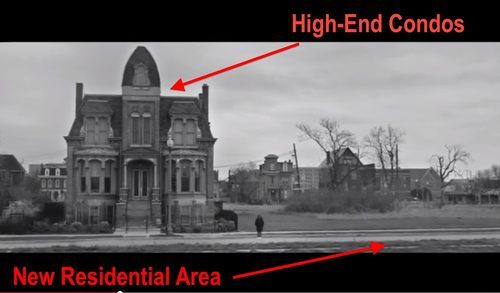
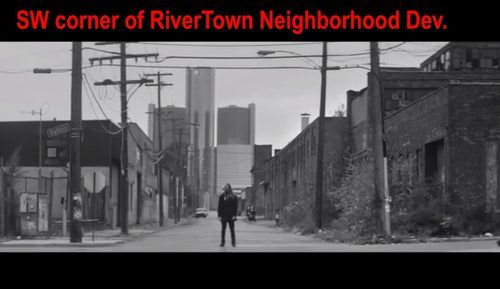
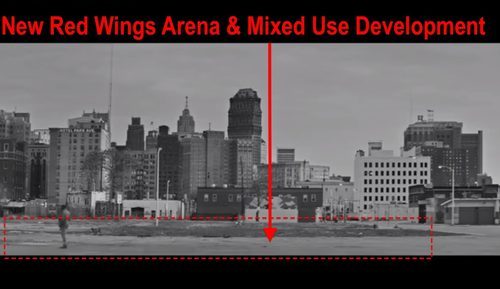
In the commercial, viewers are taken on a melancholic yet hopeful tour of Detroit, a city both scarred and stunning, where decay and possibility coexist. The camera glides past worn facades and empty streets that feel poetic in their quietness. Yet, the irony is unmistakable: nearly every location in the ad now stands on the edge of redevelopment. New construction and investment are reshaping the very landscapes that once symbolized loss.
The spot becomes a metaphor — not just for Red Bull’s program, but for Detroit itself. Like the House of Art, the city is rebuilding from its own foundation, guided by the hands of artists, makers, and cultural disruptors who see potential where others saw ruin.
Red Bull’s message, intentionally or not, captures a deeper truth about creative cities: revitalization often starts with those who can see beauty in brokenness. In Detroit, the House of Art isn’t just a project — it’s a prelude to the next chapter of the city’s creative renaissance.
Red Bull House of Art is a program for up and coming artists to develop their skill and showcase their abilities in a collaborative and inspirational environment by exploring new themes and innovative ideas. From Baroque to Banksy, the art world is always rebuilding from the foundation up. It’s this principle that is the bedrock of Red Bull House of Art. A concept born in Brazil in 2010, Red Bull continues to provide artists with the foundation, tools and resources needed to create their work without financial or institutional constraints or censorship.
– Red Bull
ACTIONABLE!NSIGHTS
- Mash-up: Red Bull × House of Art × Detroit
- Cultural Innovation: Corporate patronage as creative infrastructure
- Urban Regeneration: Art as the blueprint for renewal
- Experience Design: Inspiration through place and possibility
- Creative Behavior: Rebuilding from the foundation up
The Pulse of a City
Pulse of the City is an interactive public art installation installed in five locations in Boston that turns pedestrians' heartbeats into music. It combines art, design and technology to promote the use and celebration of public space in an uplifting and imaginative way.
From the artist, George Zisiadis:
We designed music that would complement different heart rate levels. The unit detects your pulse and then an algorithm determines the best sounds to play for you. That music then plays in synchronization to the beat of your pulse and adapts in real-time. The result is music from your heart!
A Fashion History Lesson
Transport yourself back in time via this beautiful snap-shot of a video, courtesy of Chanel. Paints a (brief) picture of the world she lived in - the world that led to a birth of an icon.